Dispatching Basics
What Does a Freight Dispatcher Do for an Owner-Operator?
8 min read
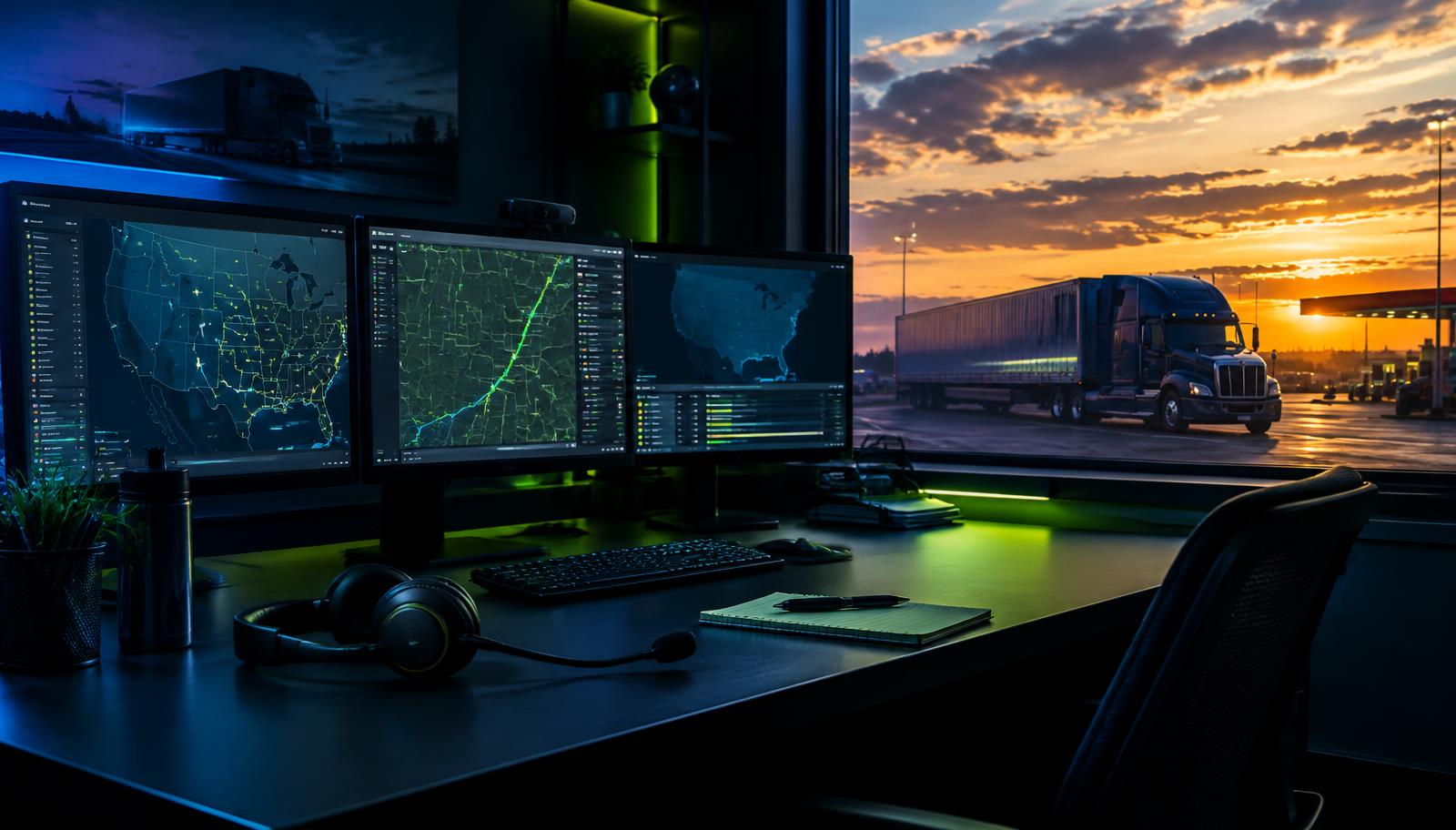
Running your own truck means running your own business.
Driving may be the part that puts the miles on the truck, but there is a lot happening behind the scenes to keep that truck moving. Loads have to be found, brokers contacted, rates negotiated, paperwork handled, appointments tracked, and the next move planned.
For many owner-operators, that's where a freight dispatcher comes in.
A freight dispatcher helps manage the administrative and load-planning side of your operation so you can spend more of your time focused on driving and running your business.
But what does a dispatcher actually do?
1. Search for Loads That Fit Your Truck
One of a dispatcher's biggest responsibilities is finding freight.
That means looking beyond whether a load simply fits on your trailer. A good opportunity also needs to make sense for your operation.
A dispatcher may consider factors such as your:
- Equipment type and trailer dimensions
- Maximum load weight
- Current location
- Preferred lanes
- Pickup and delivery schedule
- Desired home time
- Deadhead distance
- Rate and estimated rate per mile
- Where the load leaves your truck after delivery
That last point is especially important.
A load can look attractive on its own but leave your truck in an area where the next load is difficult to find. Good dispatching involves thinking about what happens after delivery, not just getting the truck loaded today.
2. Search Multiple Freight Sources
Freight opportunities can appear across different load boards and other freight sources.
Searching those sources manually takes time, especially when you're trying to compare rates, locations, mileage, equipment requirements and delivery schedules.
At True American Freight Dispatching, our dispatchers use advanced load-search technology to search across 6+ load boards and evaluate opportunities that fit each carrier's truck, equipment and preferred lanes.
Technology helps us search efficiently, but real people make the dispatching decisions and communicate with you.
3. Evaluate the Load Before Presenting It
Finding an available load doesn't automatically make it a good load.
Before presenting an opportunity to a carrier, a dispatcher can look at the complete trip rather than focusing only on the advertised rate.
That can include evaluating:
Loaded miles + deadhead + rate + schedule + destination + next-load potential.
For example, two loads might pay similar rates, but one requires significantly more deadhead or delivers into a weaker area.
The better decision isn't always obvious from the advertised price alone.
4. Check the Broker
Before accepting freight, it's important to know who is responsible for paying for it.
Dispatchers can assist with reviewing broker information and, when applicable, communicating with the carrier's factoring company regarding broker approval.
A high-paying load isn't particularly valuable if collecting payment becomes a problem.
The carrier ultimately decides whether to accept the load, but broker and factoring checks can provide additional information before that decision is made.
5. Negotiate the Rate
Finding the load is only the beginning.
The advertised rate isn't necessarily the final rate.
A dispatcher can communicate directly with the broker and negotiate on the carrier's behalf.
At True American, we fight for every dollar.
We consider the load, mileage, deadhead, equipment requirements, schedule and other relevant factors and negotiate for the strongest rate we can reasonably obtain.
That doesn't mean a dispatcher can guarantee a particular rate. Freight rates change constantly based on market conditions, location, equipment, capacity and demand.
But it does mean you have someone working the negotiation instead of simply accepting the first number offered.
6. Present the Load to the Carrier for Approval
This is an important distinction.
Your dispatcher shouldn't be deciding where your truck goes without you.
At True American Freight Dispatching:
- We search for the load.
- We negotiate the rate.
- You approve the load.
No load is booked without the carrier's approval.
You remain in control of where you run, which loads you accept, when you need to be home and what does or doesn't work for your business.
7. Handle Load Communication and Paperwork
Once a carrier approves a load, the administrative work continues.
Depending on the situation, dispatch support may include communicating with the broker, helping with rate confirmations, providing pickup and delivery information, sending addresses and map links, communicating ETAs or delays, providing requested load updates, and assisting with paperwork and proof-of-delivery submission.
For an owner-operator who is already spending hours behind the wheel, having someone handling those tasks can simplify the day considerably.
8. Start Looking for the Next Load
One of the biggest mistakes in freight planning is waiting until a truck is empty before asking: “What's next?”
A dispatcher can begin looking ahead while the truck is still under its current load.
If you're delivering tomorrow morning, the goal is to already understand what freight opportunities may be available near your destination.
This is commonly referred to as backhaul or forward load planning.
The objective isn't to guarantee that there will always be another load waiting. Freight availability changes constantly.
Instead, the goal is to start searching earlier and identify potential opportunities before the truck becomes empty.
9. Help Reduce Unnecessary Deadhead
Every empty mile costs money.
Fuel, maintenance, tires, insurance and the driver's time don't disappear simply because the trailer is empty.
A dispatcher can help evaluate freight with deadhead in mind and look for backhaul opportunities around delivery locations.
Deadhead can't always be avoided, but thoughtful planning can help prevent unnecessary empty miles.
10. Keep the Owner-Operator in Control
Hiring a dispatcher doesn't mean handing over your business.
The carrier still controls the truck.
You determine where you want to run, what equipment you operate, which loads you're willing to haul, your schedule, home-time requirements and whether a particular load makes sense for you.
A dispatcher should support those decisions—not replace them.
That's the philosophy behind True American Freight Dispatching.
Do Owner-Operators Need a Freight Dispatcher?
Not every owner-operator needs one.
Some carriers prefer searching load boards, calling brokers, negotiating rates, handling paperwork and planning their own backhauls.
Others would rather spend that time driving, managing their equipment or growing their business.
The real question is: where is your time most valuable?
If you're comfortable managing everything yourself and have the time to do it, self-dispatching may work well.
If load searching, broker calls, negotiation and trip planning are consuming hours you'd rather spend elsewhere, dispatching support may make sense.
Why True American Freight Dispatching Is Different
We didn't build True American Freight Dispatching from the outside looking into trucking.
We own and operate trucks too.
We understand why deadhead matters. We understand why the destination matters. We understand why the next load matters.
And we understand why a few hundred dollars in rate negotiation can matter when you're the one paying for the truck, fuel, insurance, maintenance and everything else required to keep it moving.
That's why we built our dispatch operation around a combination of advanced load-search technology and real human dispatchers.
Technology helps us search. Our people evaluate, communicate, negotiate and plan. And the carrier always makes the final decision.